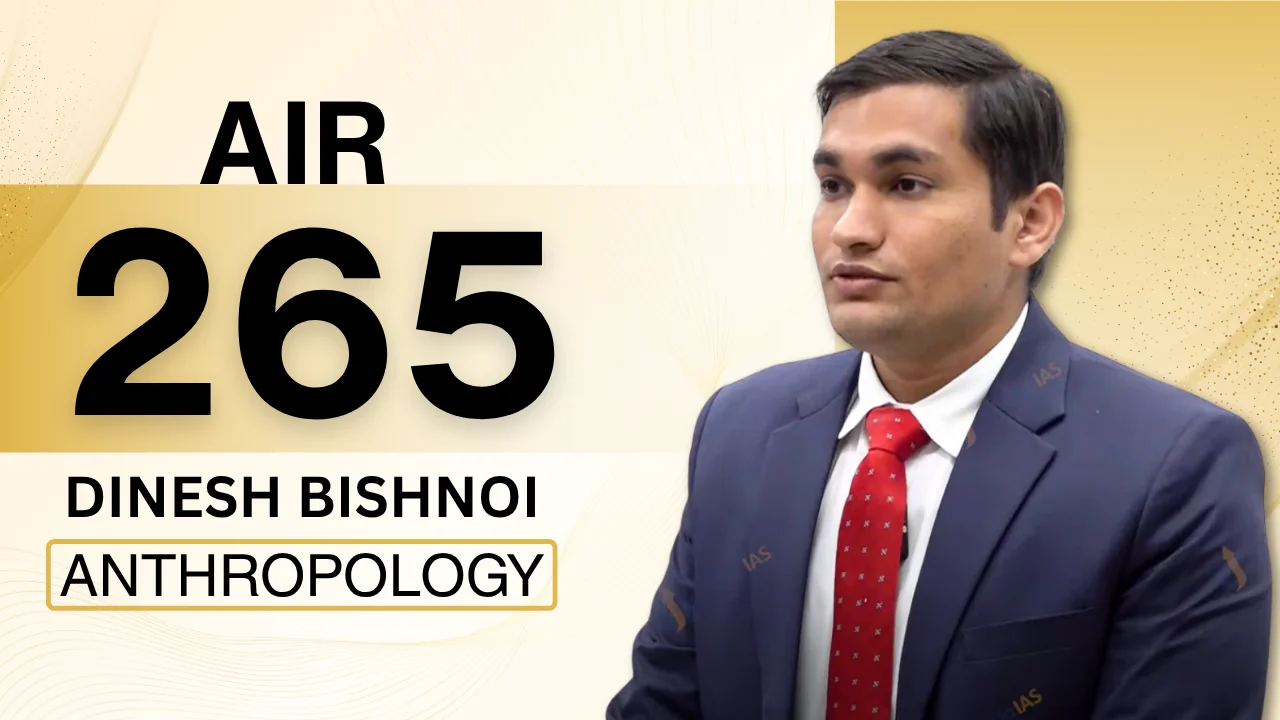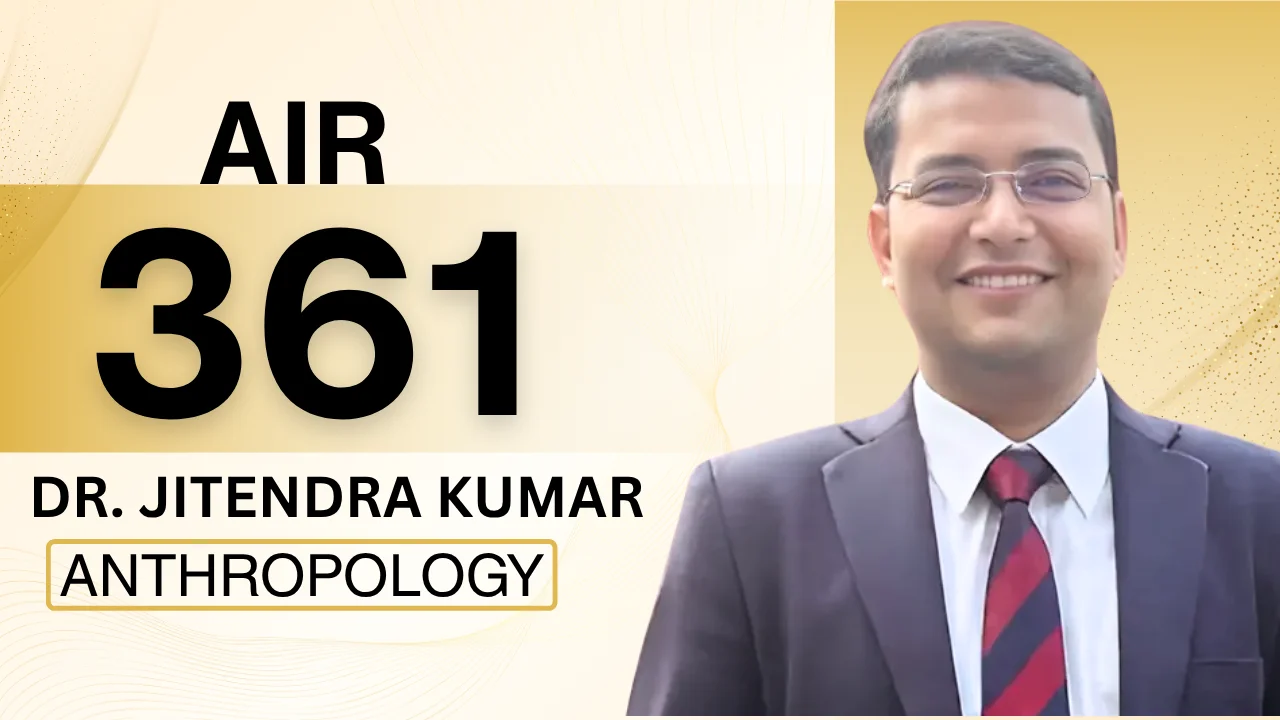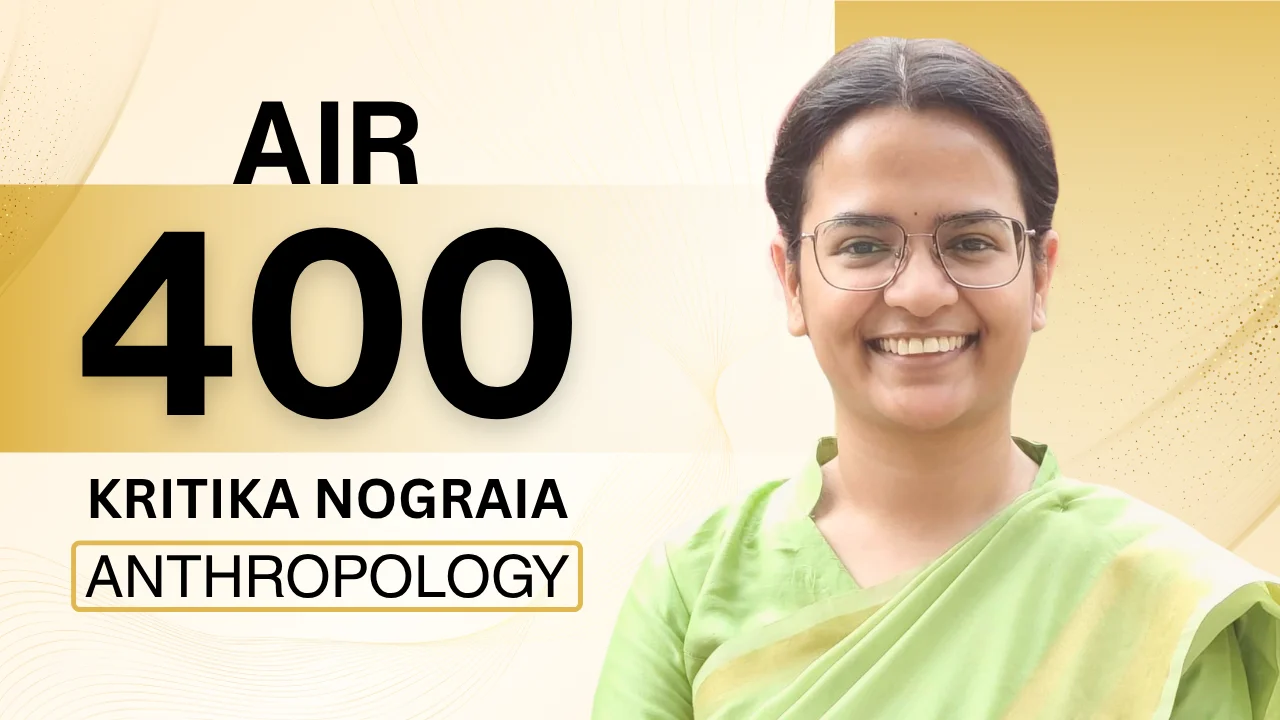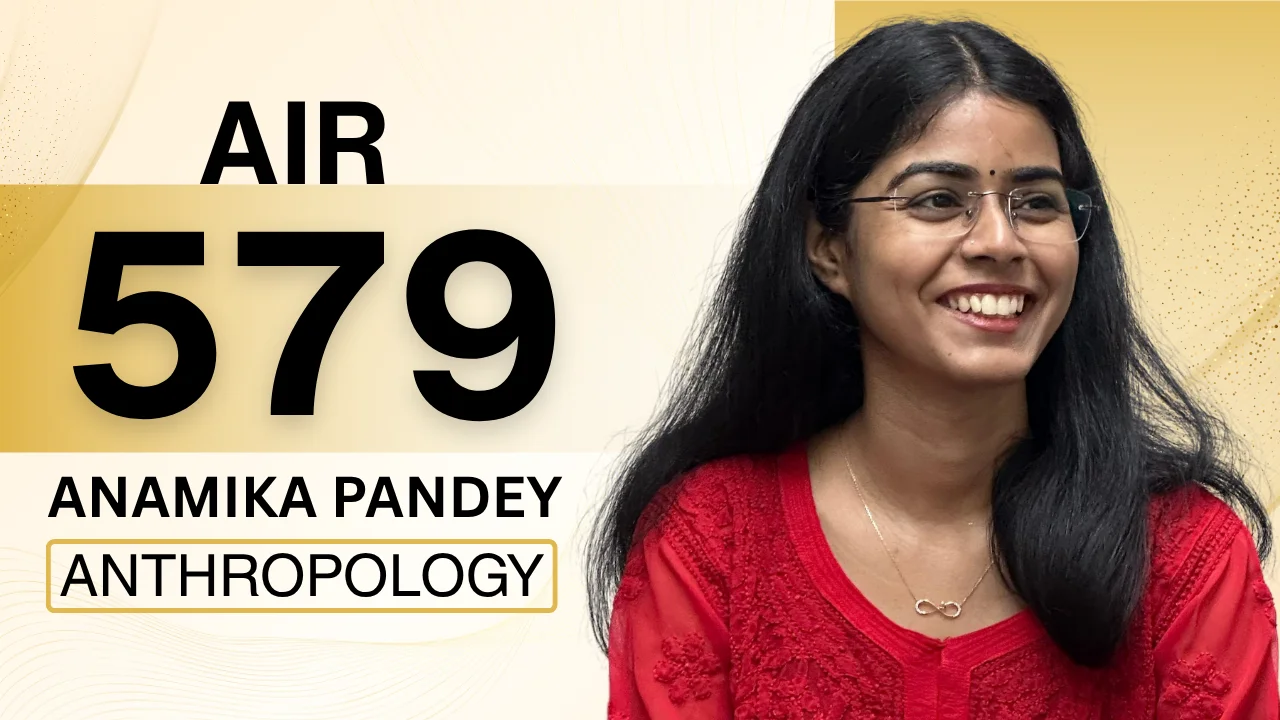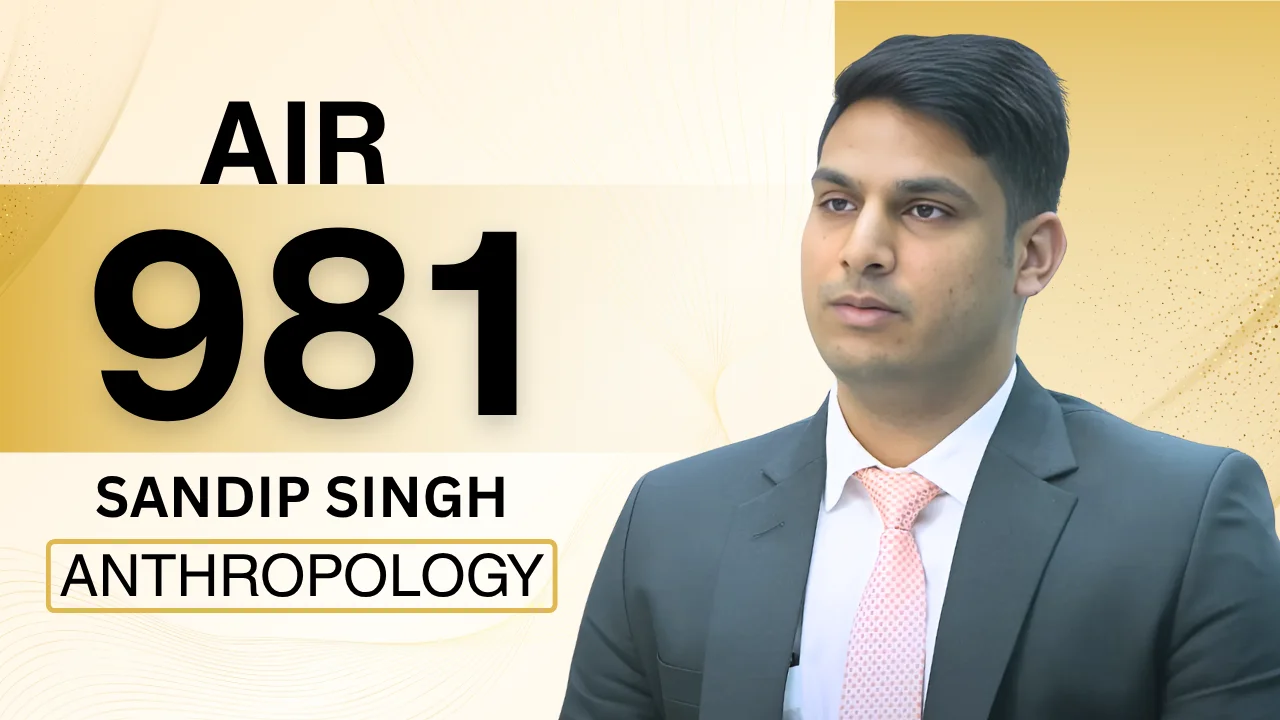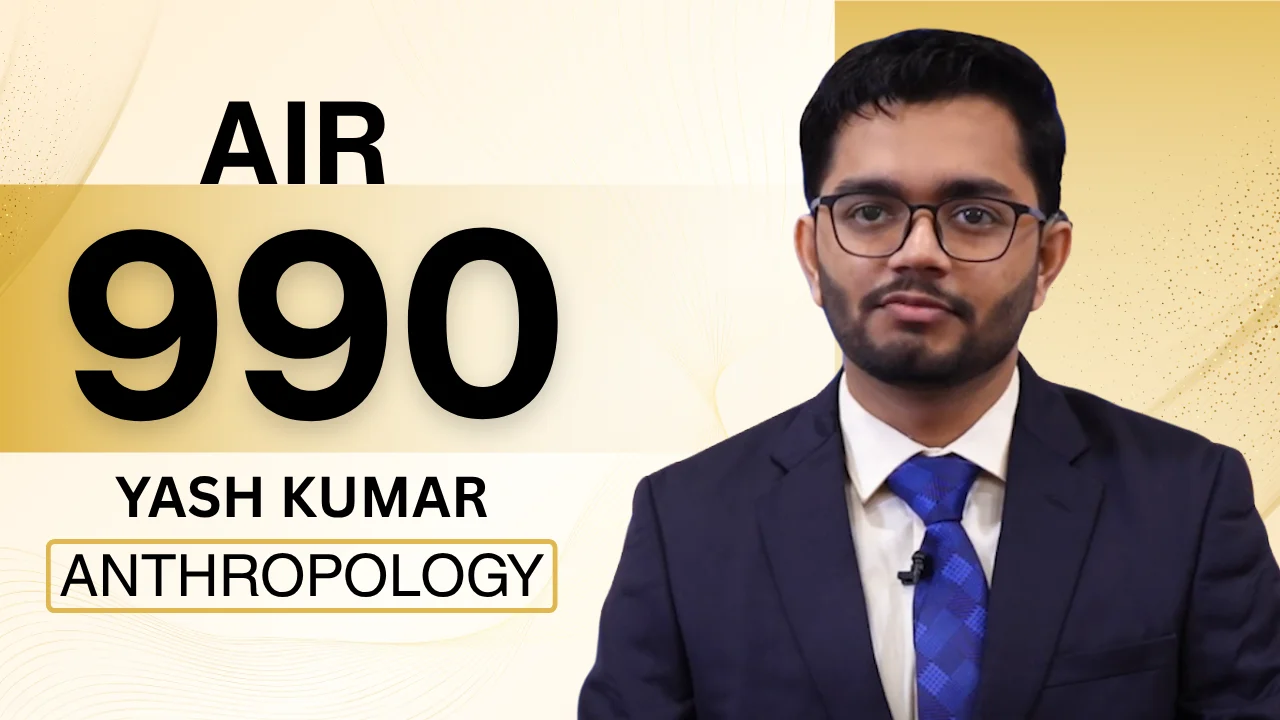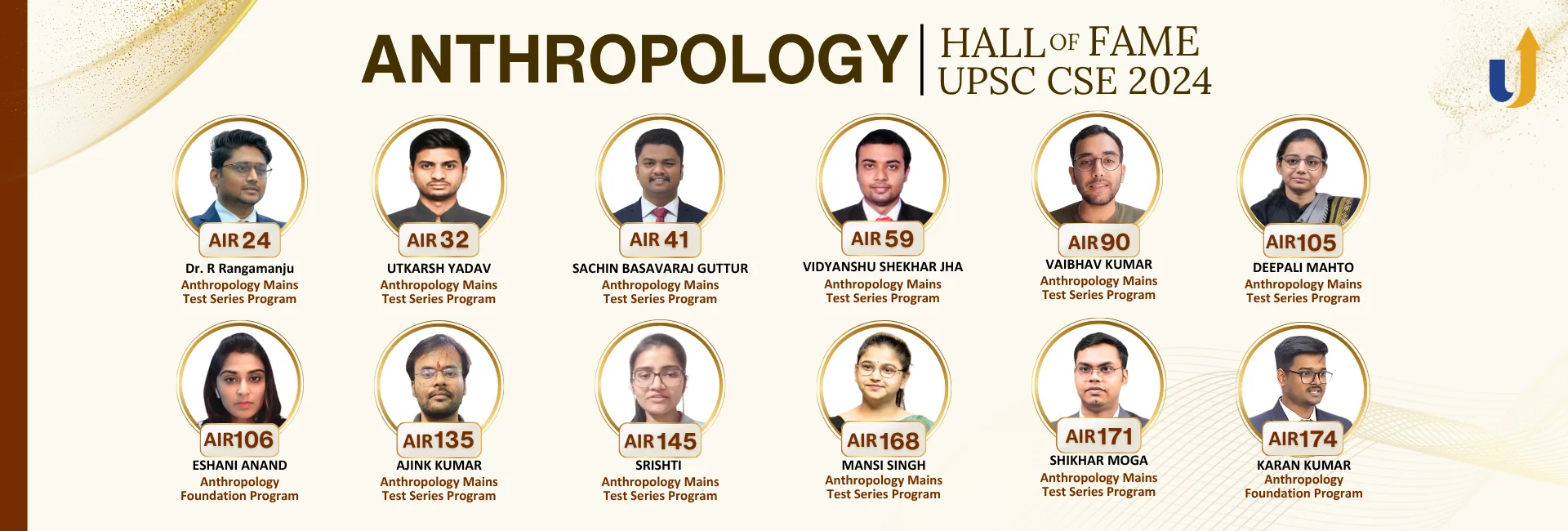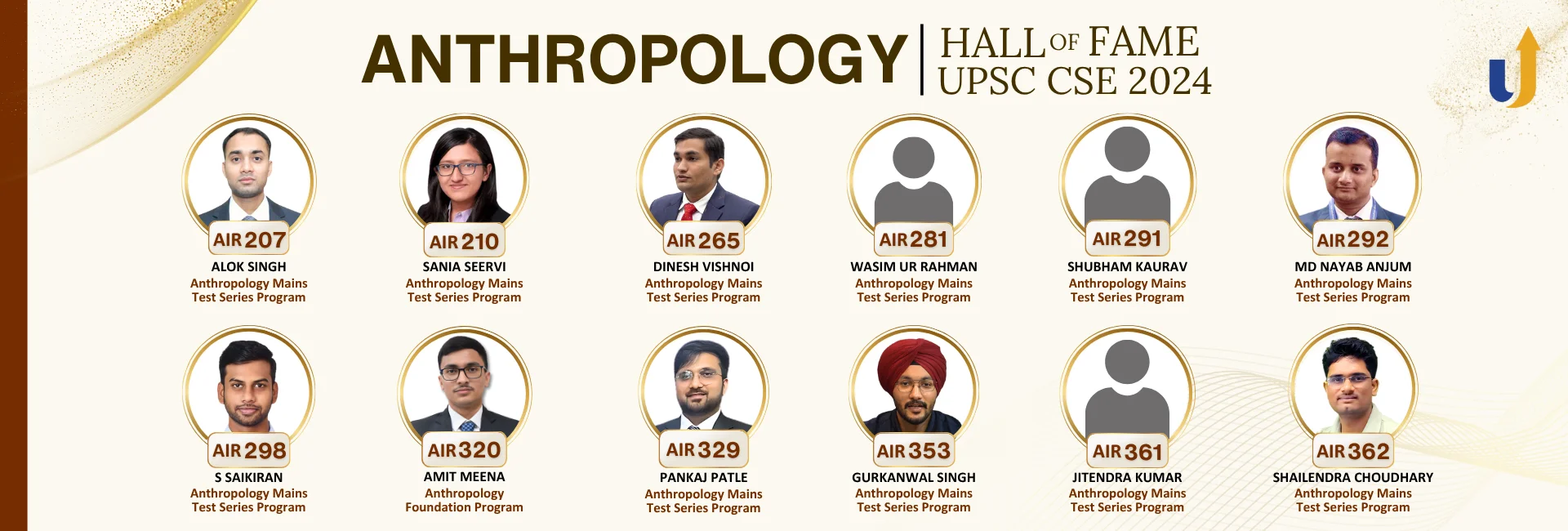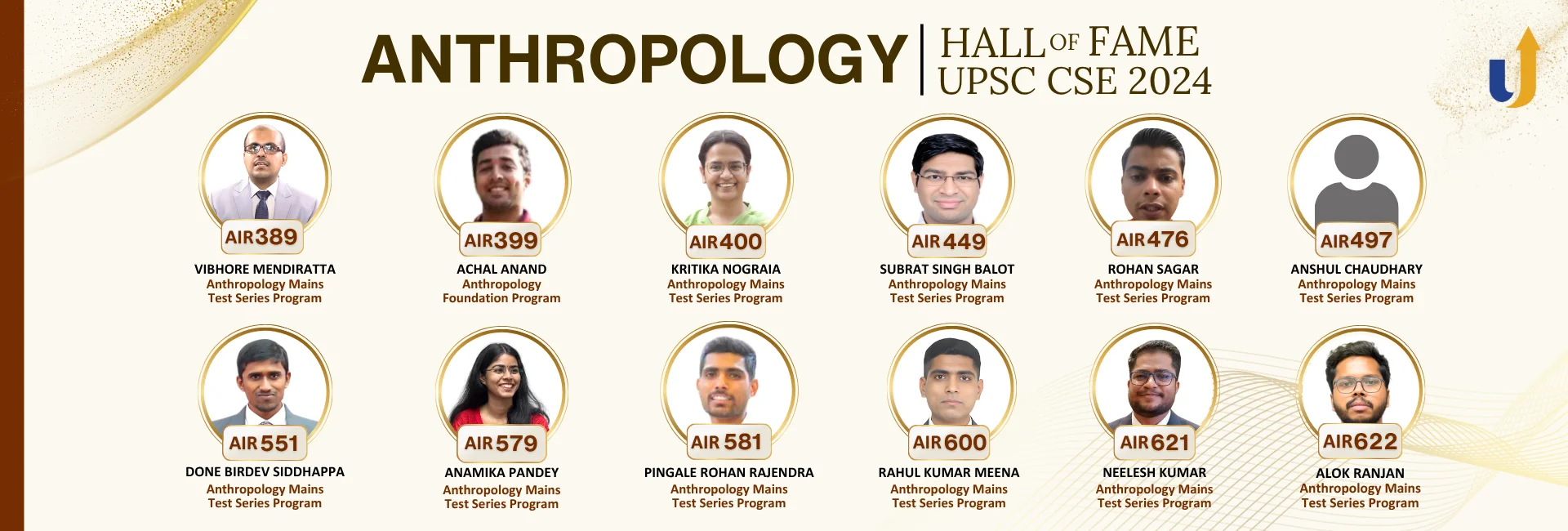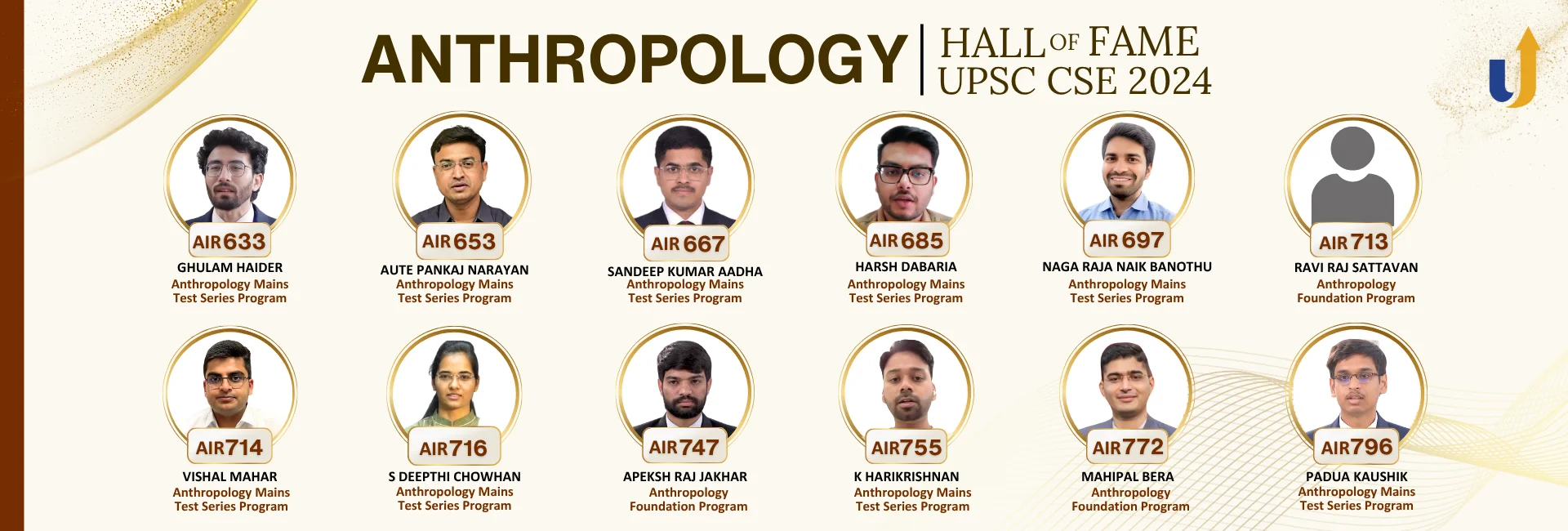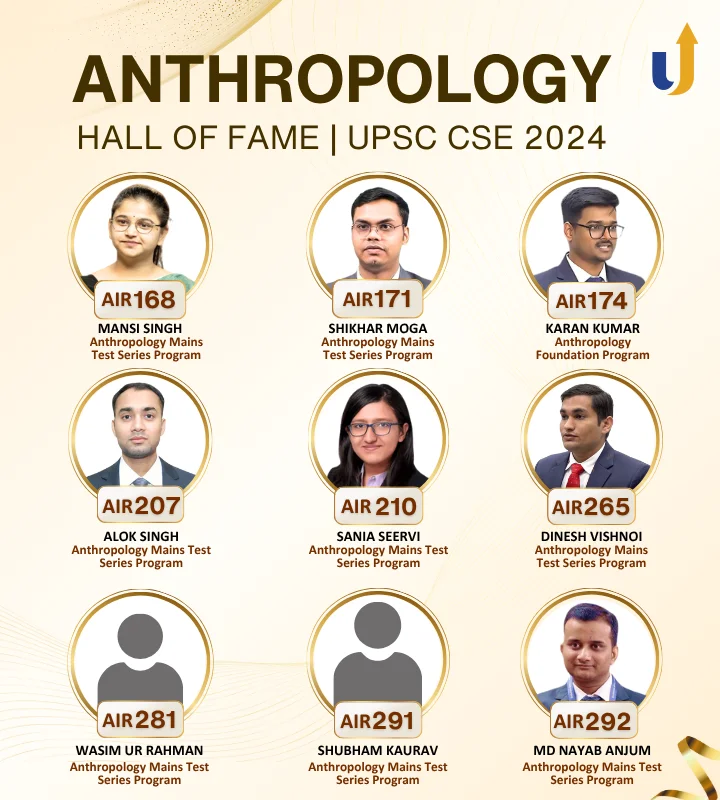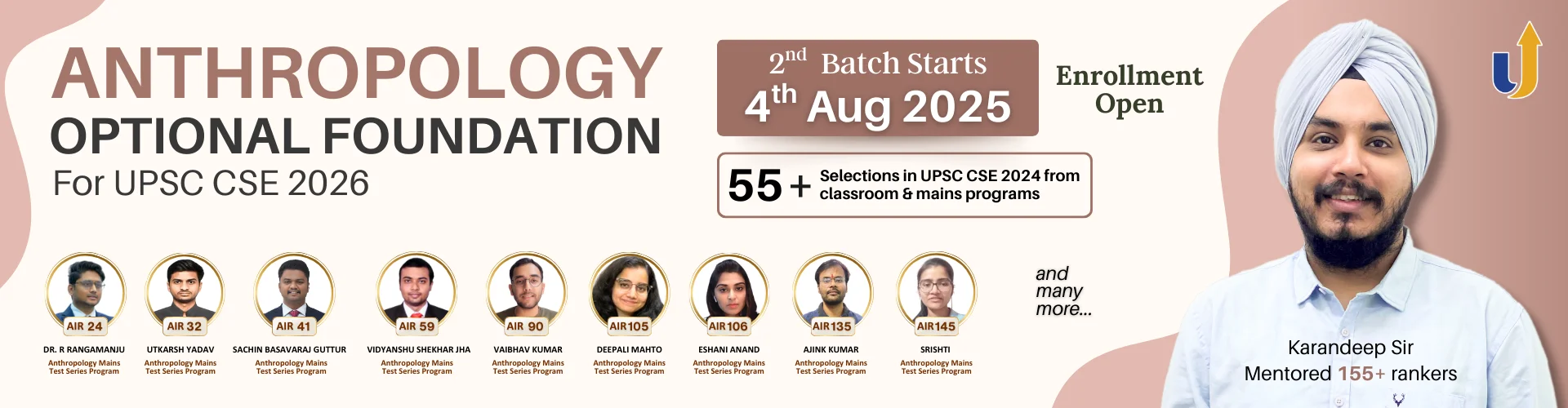
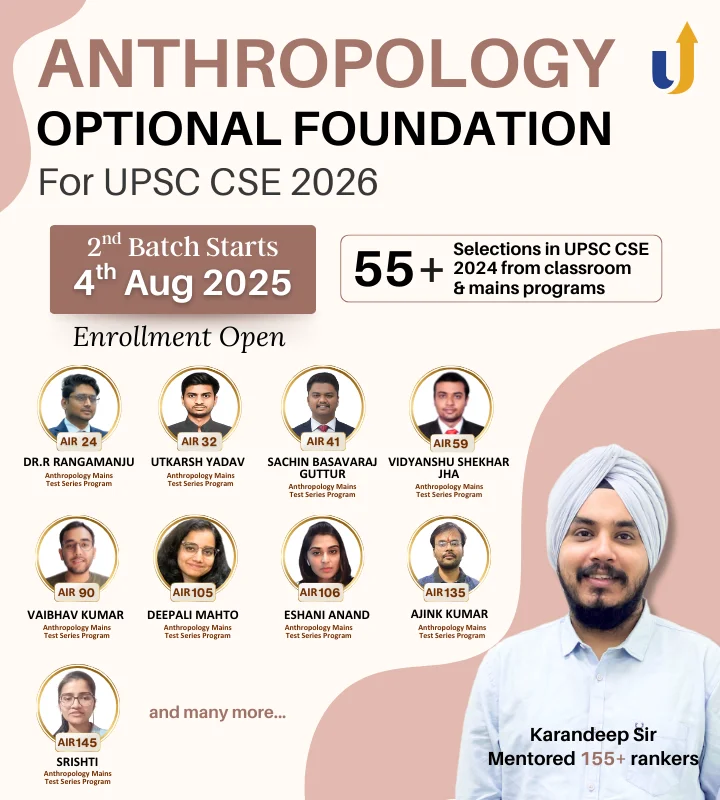

We focus on comprehensive coverage of this highest scoring subject. Our teaching methodology makes use of pedagogical techniques aided by visual presentations like documentaries, flowcharts and mind maps to clarify the anthropological concepts and theories.
Click here to join LevelUP IAS Anthropology Telegram Group
- Start Date: 22nd July 2024
- Batch Time: 05:00 PM to 07:30 PM
- Duration: 6 Months
- Delivery Mode: Online/Live & Offline
- Online (Live + 2 Views + 48 Hr Per Lecture Access only)
Course Fee
Offline Mode: ₹ 49,999
Online Mode: ₹ 47,999
Comprehensive GS Foundation Program + Anthropology Optional
Course Fee
Offline Mode: ₹ 1,40,000
Online Mode: ₹ 1,30,000
Have queries?
GET IN TOUCH
- Start Date: 22nd July 2024
- Batch Time: 05:00 PM to 07:30 PM
- Duration: 6 Months
- Delivery Mode: Online/Live & Offline
- Online (Live + 2 Views + 48 Hr Per Lecture Access only)
Course Fee
Offline Mode: ₹ 49,999
Online Mode: ₹ 47,999
Comprehensive GS Foundation Program + Anthropology Optional
Course Fee
Offline Mode: ₹ 1,40,000
Online Mode: ₹ 1,30,000

Timebound syllabus coverage

Focus on conceptual understanding

Daily answer writing - evaluation and PYQ practice

All important & Latest case studies


High-quality notes & study material

Newest concepts & trends in Anthropology covered

Personalized attention and mentoring

Two zoom sessions every week
Anthropology is one of the most rewarding optionals in UPSC – high scoring, concise, and concept-driven. However, the real difference is created by how well it is TAUGHT!
At LevelUp IAS, Karandeep Singh Sir, mentor to 155+ UPSC Toppers, brings a research-backed, PYQ-driven, and fieldwork-inspired approach to Anthropology. With a focus on clarity, relevance, and retention, this program transforms Anthropology into a scoring and enjoyable subject- even for beginners.
Let’s break down what makes it different!
Click here to join LevelUP IAS Anthropology Telegram Group

Timebound syllabus coverage

Focus on conceptual understanding

Daily answer writing - evaluation and PYQ practice

Interactive and engaging discussions

High-quality notes, case studies, and study material

Newest concepts & trends in Anthropology covered

Personalized attention and mentoring

Zoom session every 15 days

WHY YOU MUST JOIN KARANDEEP SIR'S ANTHROPOLOGY OPTIONAL FOUNDATION ?

Timebound syllabus coverage
Taught in less than six months ensuring enough time for revision.

Focus on conceptual understanding
Easy to understand pedagogy with engaging classes.
Daily answer writing - PYQ practice and evaluation
Making you well-prepared for writing in mains.

Interactive Classes
Ensuring comprehensive understanding of the subject.

Well curated study material
High quality, well-researched notes including ample case studies.

Coverage of newest concepts and trend based approach
Ensuring that you don't miss any new questions.

Personalized attention and mentoring
Approachable and responsive faculty and team at LevelUp IAS.

Regular doubt sessions
Held over zoom every fifteen days to connect with online students.

Program Details
- Start Date: 19th May 2025
- Batch Timing: 5:00 PM to 7:30 PM
- Class Schedule: 5 Days (Monday to Friday)
- Duration: 5.5 Months
- Validity: 5.5 Months
- Total 6 Tests: 4 Sectional + 2 Full Length Tests
Delivery Modes
- Online (Live & Recorded)
Note: Student can watch each recorded lecture a maximum of two times within 48 hours from the time it is uploaded on the portal.
- Offline (Limited to 200 Seats)
Anthropology Optional Foundation
Course Fee
Offline Mode: ₹ 48,000 + GST
Online Mode: ₹ 43,000 + GST
Comprehensive GS Foundation Program + Anthropology Optional
Course Fee
Offline Mode: ₹ 1,90,000 + GST
Online Mode: ₹ 1,40,000 + GST
Got questions? Let's talk!
Fill out the form & connect 1-1 with us
Batch - 2.0 Starts 28th July 2025 Admissions Opening Soon | Batch Timing: 11:00 AM to 01:30 PM
Program Details
- Start Date: 4th August 2025
- Batch Timing: 11:15 AM to 1:30 PM
- Class Schedule: 5 Days (Monday to Friday)
- Duration: 5.5 Months
- Validity: 5.5 Months
- Total 6 Tests: 4 Sectional + 2 Full Length Tests
Delivery Modes
- Online (Live & Recorded)
Note: No Hybrid access mode available.
Note: Student can watch each recorded lecture a maximum of two times within 48 hours from the time it is uploaded on the portal.
- Offline (Limited to 200 Seats)
ADMISSION CLOSED
Anthropology Optional Foundation
Course Fee
Offline Mode: ₹ 48,000 + GST
Online Mode: ₹ 43,000 + GST
Comprehensive GS Foundation Program + Anthropology Optional
Course Fee
Offline Mode: ₹ 1,90,000 + GST
Online Mode: ₹ 1,40,000 + GST
Got questions? Let's talk!
Fill out the form & connect 1-1 with us
- Start Date: 24th Nov 2024
- Batch Time: The lecture will be available at 10:00 AM
- Duration: 5 Months
- Delivery Mode: Only Recorded
- Online (3 Views + 48 Hr Per Lecture Access only)
- Six Days Lectures in a Week: Monday to Saturday
- Two Zoom Doubt Solving Sessions in a Week
- 6 Tests: 4 Sectional + 2 Comprehensive Tests
ADMISSION CLOSED
Course Fee
Recorded Mode: ₹ 31,000 + GST
GET IN TOUCH
STRUCTURE OF KARANDEEP SIR'S CLASS

Handouts before class

Lecture & Note taking

Discussion and doubt solving

Daily home assignment - PYQ based answer writing
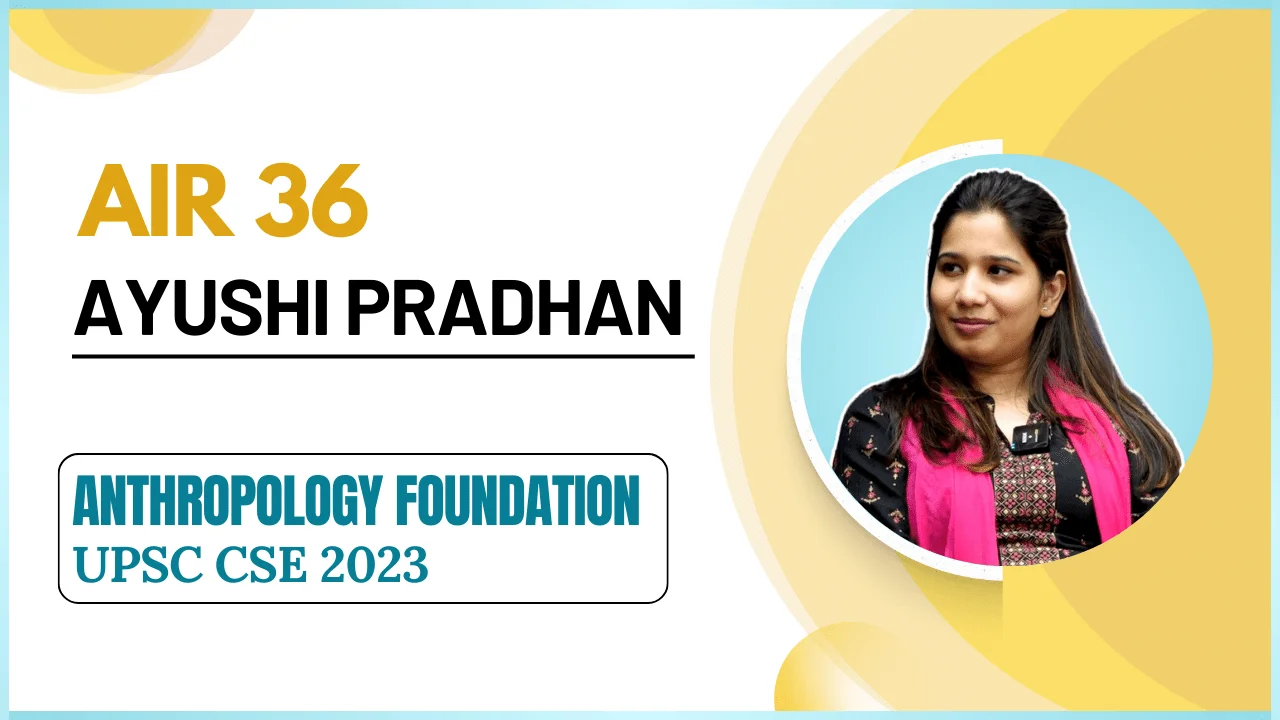
Why UPSC Toppers TRUST Karandeep Sir ?
Watch Karandeep sir's orientation session of last batch


Yes, Anthropology is a scoring optional in UPSC. It has a balance of static and dynamic topics, science and humanities, facts and application. The subject is easy to understand, and many questions repeat year on year. This makes Anthropology a safe and reliable optional compared to others.
The Anthropology optional syllabus is short and well-defined. Unlike other optionals where topics spill over, here everything is clearly listed. Past year UPSC papers show frequent repetition of topics. That makes the syllabus easier to cover and revise quickly.
Yes. Anthropology can be completed in 6 months with classes, tests, and at least two revisions. This makes it one of the fastest to complete optional subjects.
No. Anthropology optional does not need any prior background. Many toppers have been from engineering, arts, and commerce backgrounds. The subject is general in nature and can be understood easily with the help of base knowledge that you have developed reading NCERTs in 9th and 10th standard, especially the biology part (remember the chapter, Heredity and Evolution?)
Yes, Anthropology is still a high-scoring optional in UPSC. On average, students score between 240–280 marks with decent preparation. Strong writing, relevant examples, and case studies help you cross over the line to 300s. While competition is intense, Anthropology continues to give an edge.
Keep your Anthropology booklist small. Standard books + class notes + PYQs are enough. From our end we suggest you go for Karandeep sir’s class notes and study material. Go through toppers copies available on our website. Don’t overload, stick to your base notes and revise them multiple times. Utilise the extra time in writing PYQs.
Self-study works if you’re disciplined, already have good notes, and can practice writing regularly. Coaching helps when you are starting fresh. The structured preparation helps you crack the code in time, and helps you work smarter rather than only harder.
Keep it simple. Start with class notes + handouts. Then, add PYQs, diagrams, and current examples. From our end we ask you to not get into collecting content. The class notes provided are enough. Any further reading can be done from the handouts which have content from all the major sources like basic texts, IGNOU, and epg-Pathshala.
Diagrams and flowcharts make your answer quick and clear. Case studies add depth. Even simple flowcharts can add dynamism to your monotonous answers.
PYQs are gold for Anthropology. Nearly 60–70% of questions are repeated in some form. Analyse them topic-wise, mark recurring themes, and practice writing those answers multiple times. This will help you prioritise what to study and what to skip. Refer to the booklet on our website.
Pick the most relevant current affairs areas—tribal policy, health, environment, governance. Collate data on FRA patta allocations, PESA, NHFS data, recent schemes, and committee reports. These would come in handy, especially in Paper 2. Even one current example per answer makes it stand out.
Keep a daily slot for optional, even during GS-heavy phases. For example, 3 hours Anthropology + 6 hours GS. At the beginning, give more time to optional, since it is a fairly new subject for you to study, later maintain a balance between both.